
Clinical MRI Quality Control
Make your accreditation easy.
Simply Physics helps you set up scans, run tests, submit paperwork, keep up your magnet, and handle every other part of a complicated process.
ACR regulations are tough

Daily analysis is a nuisance.
It either lacks depth or requires a dedicated on-site physicist.

Yearly testing takes time and expertise.
Most physicists don’t specialize in MRI, so most are only capable of a cursory analysis.

ACR guidelines are specific and difficult.
We have over 31 years of direct experience with ACR submissions.

Simply Physics provides easy solutions
Daily QA
Five minutes a day. We watch everything.

We help you set up a 5-minute scan
Train techs
We show them how to position the coil and phantom.
Pre-program scanner protocols
Run the QA scan with the click of a button.

You upload the results to our server
One-click transfers
We set up your scanners to transfer data effortlessly.
User web portal
Easy access to all your daily and monthly reports, plus scanner statistics over time.

We notify you of any problems
Instant analysis
We alert you within half an hour if we detect any issues.
Longitudinal tracking
We compare your system’s performance to global benchmarks — and to itself.
Yearly QA
The ACR makes it hard. We make it easy.
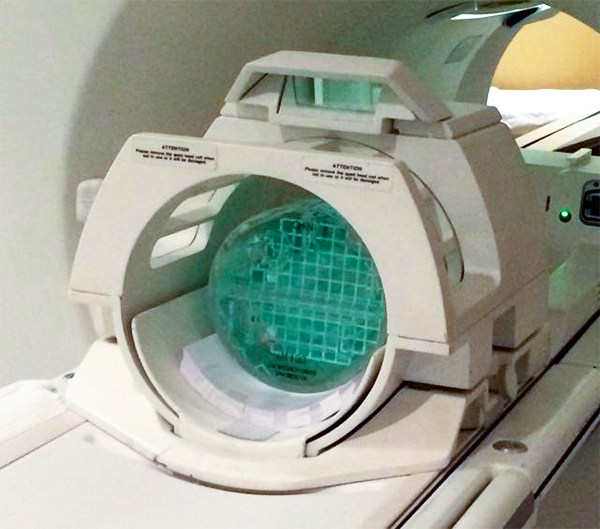
RF coil testing
- Modern magnets use complex coils with overlapping channels.
- 85% of sites are using coils with at least one dead channel without realizing it.
- We carefully test each channel of each coil to ensure peak performance.
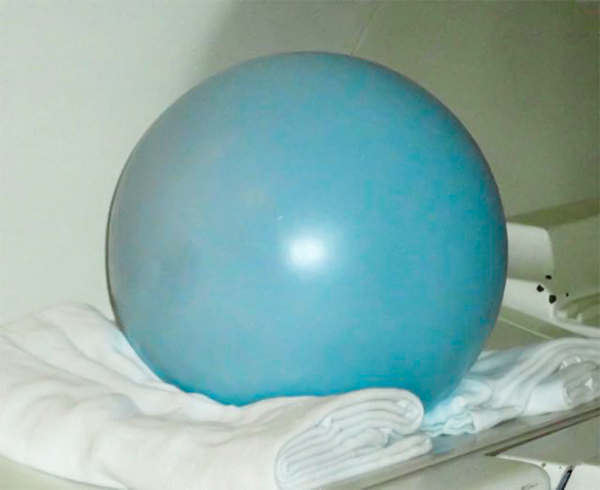
Magnet homogeneity & gradient calibration
- Most QA programs and manufacturer diagnostics only check homogeneity near the center of the scanner.
- We test across an extremely broad field of view — and often catch problems that even the manufacturer’s service engineers miss.

Longitudinal tracking & documentation
- Track over 40 different variables.
- Dynamically generate graphs for each statistic.
- Spot outliers or gradual magnet drift — and catch problems before they affect clinical performance.
Tri-annual ACR Accreditation
One third of all sites fail their first attempt.
Our clients don’t.
Simply Physics has a success rate above 99% across more than a thousand submissions.
In the unlikely event of a failure, we pay the resubmission fee.
With over 30 years of direct experience, we understand how to modify scan parameters to get the most out of your scanners.
Even the oldest of scanners can pass when given the proper care and configuration.
We do all the busywork. You simply acquire the images.
We review them for ACR compliance and, if changes are needed, tell you exactly what to adjust and how.
Get started